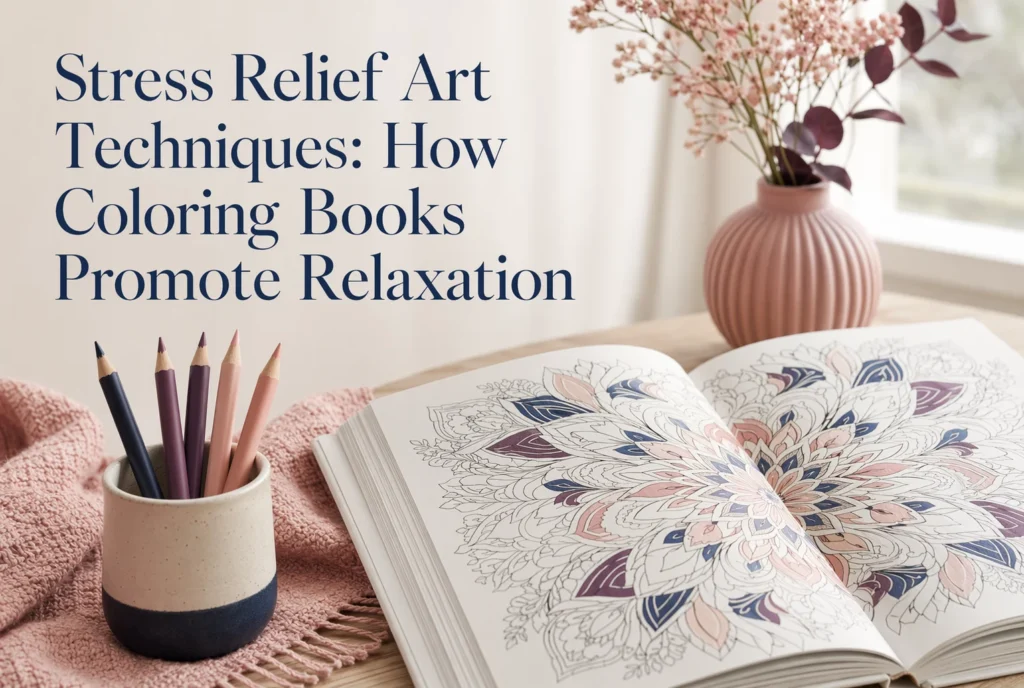
Quick Summary: Coloring books help reduce stress by giving your brain simple, repetitive tasks that calm the nervous system. Structured patterns like mandalas or large shapes focus attention and lower anxiety. Setting aside 10 to 20 minutes with slow breathing and minimal choices makes it an effective relaxation practice.
A 15-minute mandala session after a rough day can quiet looping thoughts, hold your focus, and make stress feel less intense in your body. Many Stress Relief Activities feel hard to start when you are already drained. This guide shows why Coloring Therapy works, how it fits with other Relaxation Techniques, and how to use coloring books as one of the simplest Stress Relief Activities for adults, teens, and families seeking steady, low-pressure Stress Relief Activities.
Why Coloring Books Calm the Nervous System
How structured patterns reduce mental load
Coloring works best when the page gives your brain just enough to do. A pattern, border, or repeated shape cuts down on decision fatigue. You are not staring at a blank page, trying to invent something from scratch. That matters, because structured coloring has reduced anxiety more than unstructured drawing in Art Therapy research.
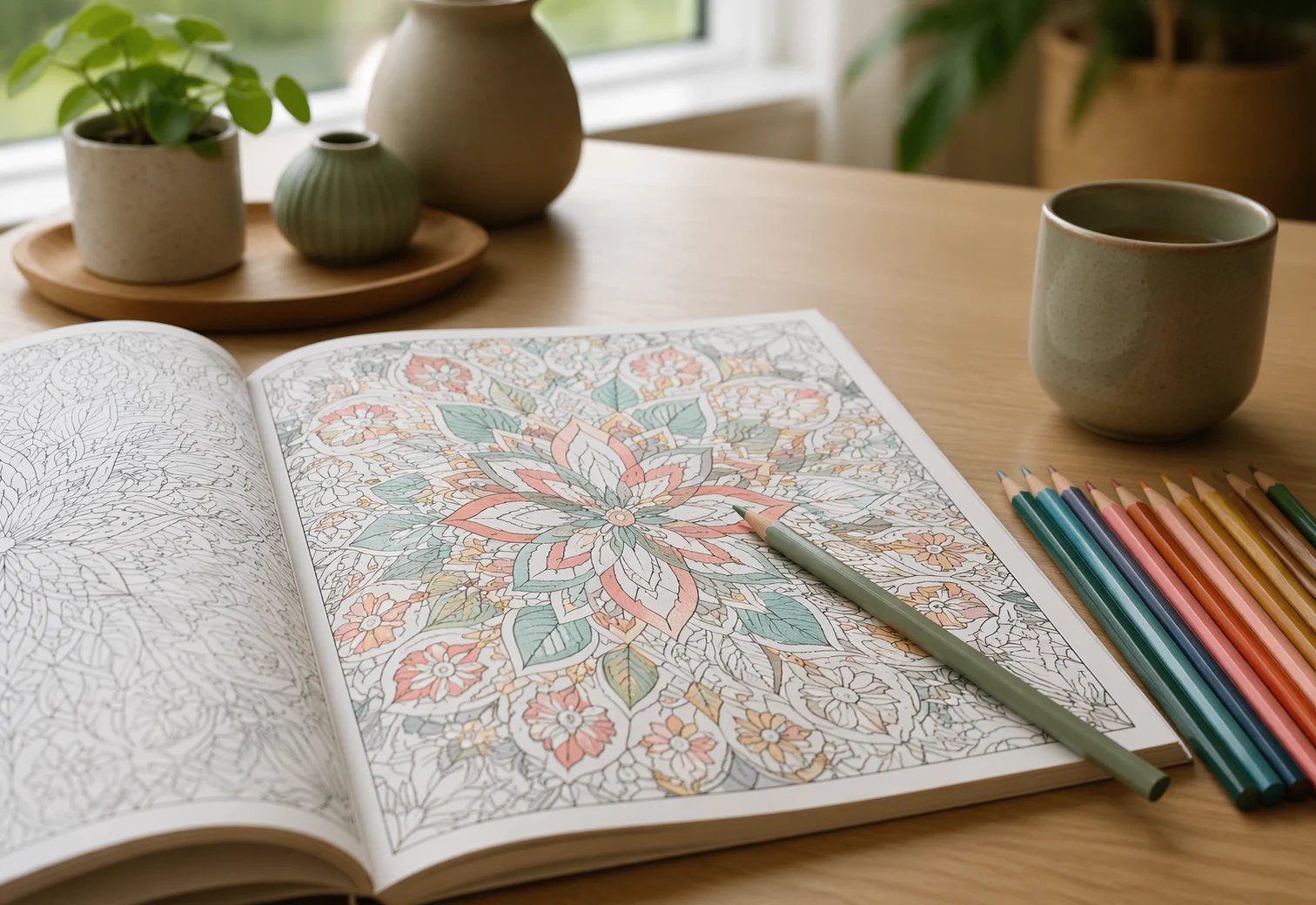
A simple page can help because it asks for:
- small choices, not big ones
- steady hand movement
- visual focus on one area at a time
Soft, guided layouts often feel easier to start when your mind already feels full.
Why repetition helps attention shift away from stress
Repeated strokes, shading, and filling spaces give attention a safe place to land. That shift can pull you out of rumination and back into the present moment. One randomized study found coloring lowered anxiety and increased mindfulness and selective attention after the task in controlled testing.
Try this when stress spikes:
- Pick one small section.
- Use two or three colors only.
- Match your breathing to your hand speed.
Also Read: Ultimate Guide to Choosing Monochrome Coloring Books for Adults
How to Turn a Coloring Session Into a Real Relaxation Practice
A coloring break works best when you treat it like a short reset, not just a hobby. The goal is to help your body shift out of stress mode. The NCCIH notes that relaxation techniques can create a relaxation response that slows breathing and lowers physical tension according to NCCIH.
- Choose the right page for your stress level
- If you feel wired or restless, pick broad shapes and open space.
- If your mind is racing, try simple repeats like leaves, waves, or tiles.
- If you feel flat or drained, use a page with a little more detail to hold attention.
- Soft Ink Press styles fit well here because soft guides feel less demanding.
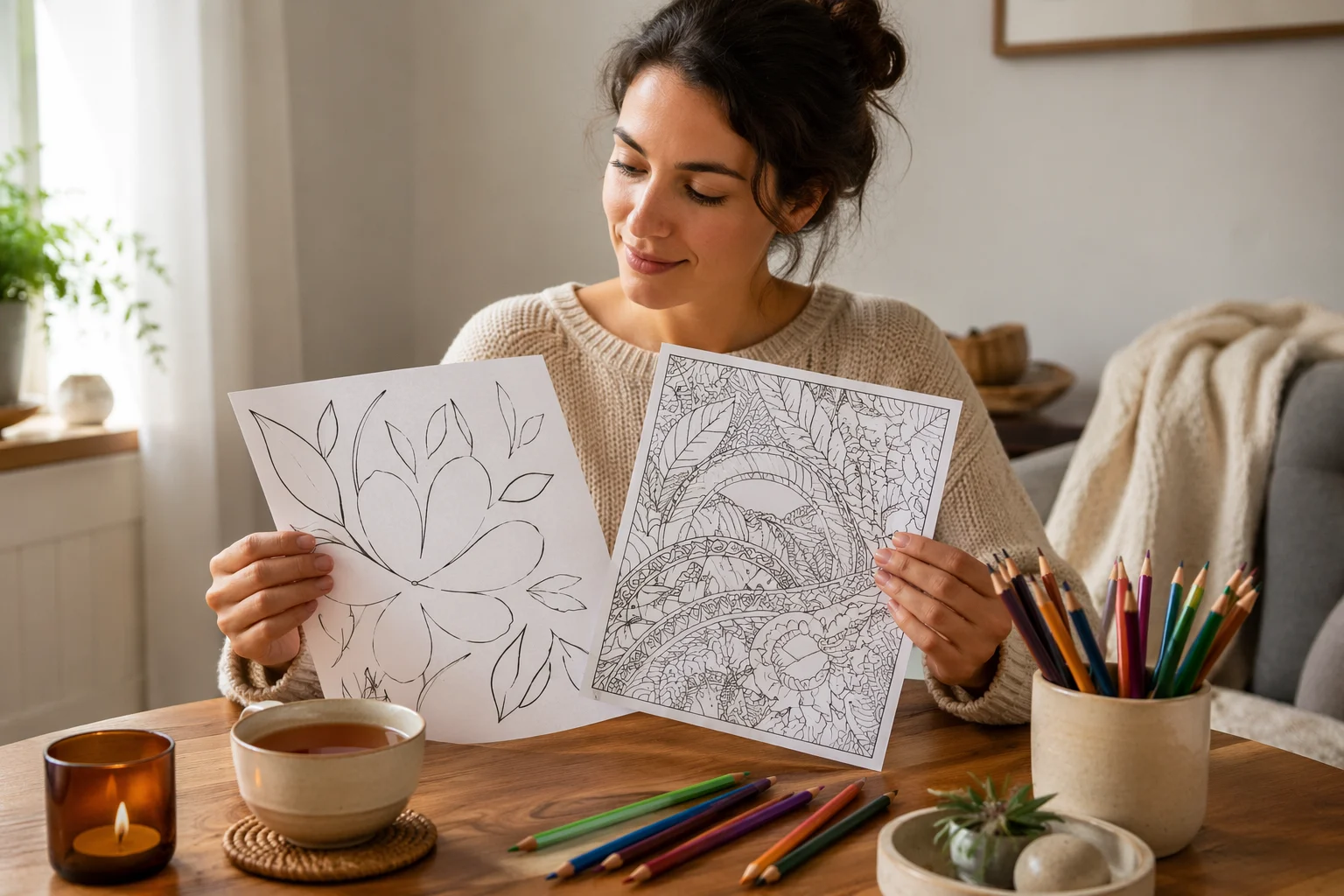
- Set up a 10- to 20-minute calm-down ritual
- Put your phone face down or in another room.
- Sit somewhere with steady light and low noise.
- Set a timer for 10, 15, or 20 minutes.
- Start with one color family, not your full pencil set.
Keep the setup easy. Fewer choices usually means less mental load.
- Use breath, posture, and pace as anchors
- Drop your shoulders and unclench your jaw.
- Breathe in slowly through your nose, then exhale longer.
- Color in small strokes instead of rushing to finish.
The CDC recommends daily stress care and simple habits like deep breathing and time to unwind for managing stress.
Which Coloring Styles Work Best for Relaxation
The most calming styles share one trait: they give your brain enough structure to focus, but not so much pressure that you tense up.
-
Mandalas and symmetrical patterns
Structured shapes work well because repetition settles attention. Research found that completing mandalas improved mood and lowered state anxiety, and a 2024 clinical pilot saw anxiety drop after coloring complex circular forms in care settings (mandala study, Frontiers pilot). -
Simple large-format designs for beginners and children
Big spaces, clear outlines, and low detail reduce frustration. This style helps if tiny patterns make you feel rushed, perfectionistic, or overstimulated. -
Digital versus paper coloring
Both can relax you. Paper feels slower and more tactile. Digital is cleaner and easier on the go. Recent studies suggest both formats can reduce anxiety, with results often coming down to comfort, tech ease, and how immersed you feel.
| Style | Best for | Watch out for |
|---|---|---|
| Mandalas | Focused adults | Too much detail |
| Large-format pages | Kids and beginners | May feel less absorbing |
| Digital coloring | Travel and quick sessions | Screen distraction |
Ready to turn stress into a simple coloring habit? Try Soft Ink Press for calm, mindful pages you can print or enjoy anytime.
Frequently Asked Questions
Q1: How do coloring books promote relaxation and stress relief effectively?
Coloring gives your mind one simple task. Repeating small hand movements can slow racing thoughts, lower tension, and create a calm rhythm. Focused coloring also pulls attention away from stress triggers and back to the present moment.
Q2: What art techniques in coloring books help reduce anxiety and support mindfulness?
Use slow shading, steady strokes, simple patterns, and limited color choices. These techniques reduce decision fatigue and keep your attention on touch, pressure, and breath. Start with easy shapes if detailed pages make you feel tense.
Q3: How can coloring books enhance mental health and emotional well-being?
Coloring can help you feel grounded, more in control, and less mentally crowded. It supports short breaks, emotional reset, and gentle self-expression. Regular sessions often work best when paired with quiet time, music, or deep breathing.
Conclusion
Coloring books help because they narrow attention, slow rumination, and make calm feel doable. Recent research and a 2026 meta-analysis support stress and anxiety relief, especially with short, repeated sessions.