Quick Summary: A 60-centimeter spot by your sofa with a lap desk and lidded box turns clutter into a stress-relief zone in minutes. Use warm, muted colors and soft lighting-like a window or shaded lamp-to avoid eye strain and keep the space visually calm, especially with Soft Ink Press’s open white pages. Store only what you need for one session, hiding extras vertically to maintain a clean, reset-ready surface. End each session with a five-minute cleanup: mark your page, return supplies, and wipe the desk to signal a fresh start.
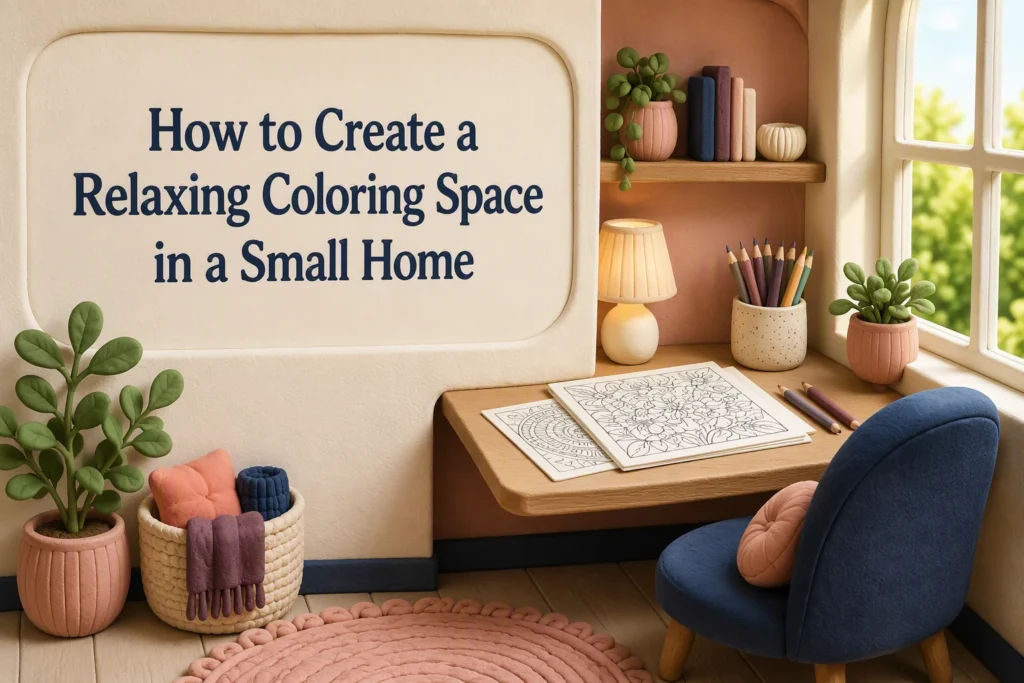
A 60-centimetre spot by the sofa, a folding lap desk, and one lidded box can give you a calm place to color. The hard part of small home coloring is keeping supplies close without letting them take over. This guide shows how to build a calm coloring space with smart seating, light, storage, and a quick reset. It also helps you create a minimalist coloring room feel in any corner. These small home coloring ideas come from practical, daily-use setups.
Step 1: Claim the Smallest Calm Corner That Fits
Use a Micro-Zone Instead of a Whole Room
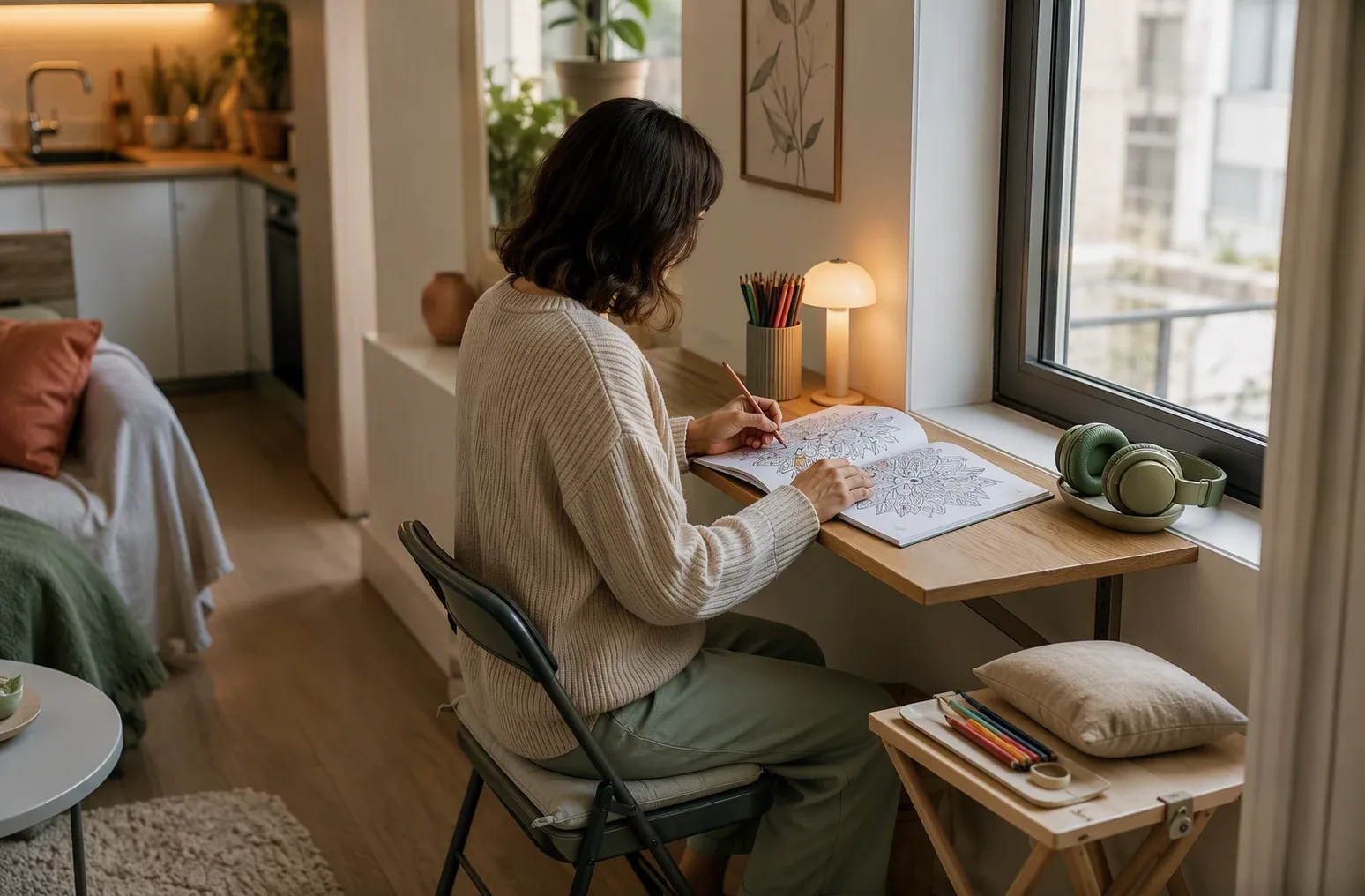
Choose one spot: a chair arm, bedside table, or end of the kitchen table. Small home coloring works best when setup takes under two minutes.
- Keep it near daylight or a warm lamp.
- Face away from busy traffic if possible.
- Use headphones if the room stays noisy.
A quiet, comfortable space supports mindful time, as CDC guidance suggests.
Pick a space you can reset fast, not a spot that looks perfect.
Set the Surface for Comfortable Coloring
| Surface | Best use | Quick fix |
|---|---|---|
| Lap desk | Sofa or bed | Add a non-slip mat |
| Folding tray | Small home coloring | Store behind a door |
| Side table | Daily sessions | Use a pencil cup |
Keep your page flat and your shoulders loose. CDC notes that avoiding over-reaching and awkward posture helps you stay comfortable while seated.
Also Read: Ultimate Guide to Choosing Monochrome Coloring Books for Adults
Step 2: Build a Soft, Low-Stimulation Lighting and Color Plan
Layer Daylight With Focused Task Light
Place your coloring spot near a window, but avoid direct sun on the page. Add a small, adjustable lamp aimed at the paper, not your eyes. Choose a warm bulb for evening sessions. Research finds cooler home lighting can suppress melatonin more than warm lighting, especially at night (PMC study).
- Use daylight first.
- Add a shaded task lamp after dusk.
- Skip harsh overhead glare.
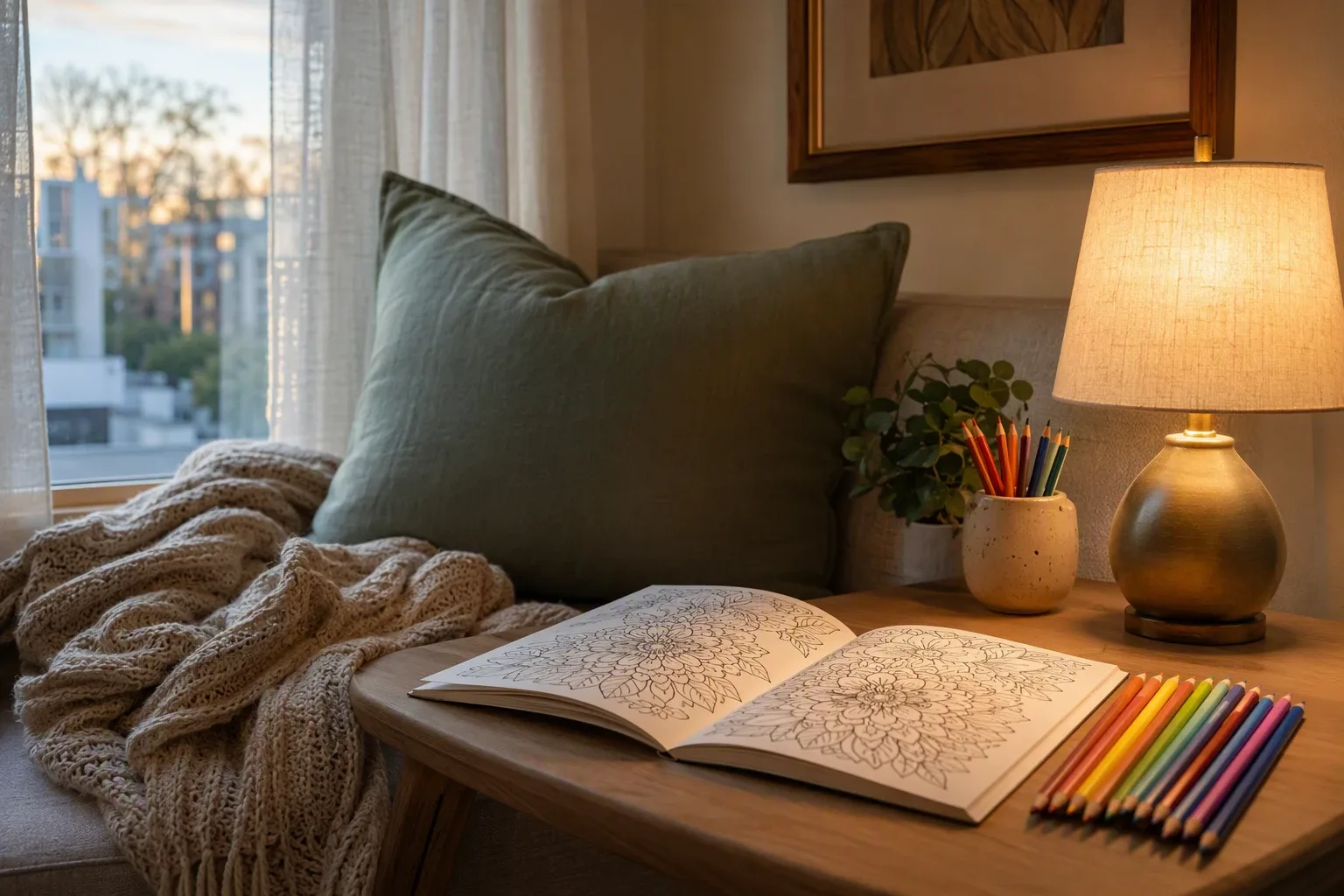
Choose Muted Nature-Inspired Accents
Keep the area visually quiet with sage, clay, soft blue, or warm beige. Use one accent color in a cushion, tray, or pencil cup. These tones support the open white space in Soft Ink Press pages.
| Choose | Avoid |
|---|---|
| Matte, muted shades | Bright neon accents |
| Warm lamp glow | Cool white glare |
Also Read: Botanical – softinkpress.com
Step 3: Limit the Active Kit and Store Everything Else Vertically
Create a One-Session Coloring Caddy
Keep only what you need for this coloring session in a small caddy:
- One book or page
- 8-12 pencils or markers
- Sharpener, eraser, and blotter sheet
Fewer choices help the table feel calm. Return every item after use. Utah State University notes that a clear space can support focus and reduce stress.
Use Vertical, Hidden, and Under-Surface Storage
Store spare supplies in labeled wall pockets, a slim shelf, or a lidded box under a chair. Keep heavy books low and light items higher. Secure tall units to prevent tipping, as UC safety guidance recommends.
Keep the active caddy visible. Hide backups so your coloring spot stays restful.
Also Read: Articles – softinkpress.com
Step 4: Add a Five-Minute Reset That Protects the Calm
Close the Session Without Losing Your Place
Set a timer for five minutes before you stop.
- Mark your page with a scrap card.
- Return pencils to their color groups.
- Wipe the work surface.
- Take three slow breaths.
Slow breathing can support the body’s relaxation response, according to the National Center for Complementary and Integrative Health.
Leave out only tomorrow’s first three colors.
Make the Nook Work for Real Life
Keep the whole setup in one lidded tray or zip pouch. It should move fast if dinner, homework, or guests need the table.
| Reset item | Simple home |
|---|---|
| Current page | Flat folder |
| Pencils | Small case |
| Sharpener and eraser | Side pocket |
A reset is not perfection. It is a clear signal that your calm space will be ready again.
Create a calm corner anywhere with print-ready pages from Soft Ink Press. Choose a design, color with ease, then pack it away neatly.
Frequently Asked Questions
Q1: How can I create a calming coloring space in a tiny apartment?
Use a tray, lap desk, or narrow shelf near soft light. Keep one book, a few pencils, and a small pouch ready. Pack it away after each session.
Q2: What are the best colors for a relaxing coloring nook?
Choose muted blue, green, gray, or warm beige accents. Avoid harsh bright light. A warm lamp helps your eyes relax.
Q3: How do I organize a small space for coloring and stress relief?
Sort supplies by use: pencils, sharpeners, and finished pages. Store them in one handled caddy. Keep only your current project visible.
Conclusion
A small, reset-ready coloring space needs good light, easy reach, and a clear end routine. Brief mindful coloring may reduce perceived stress, as one randomized trial found.