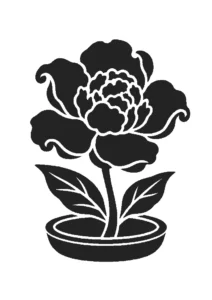
Grayscale and monochrome coloring pages can look almost identical on a shop shelf: both are gray, both look calm and both are labeled “for adults”. Yet they ask you to do opposite things. Grayscale pages give you the shading and ask for lots of color; monochrome pages give you the shapes and ask for one. This guide explains the difference, shows how to color each, and helps you decide which suits you.
Grayscale vs monochrome coloring: the difference in one minute
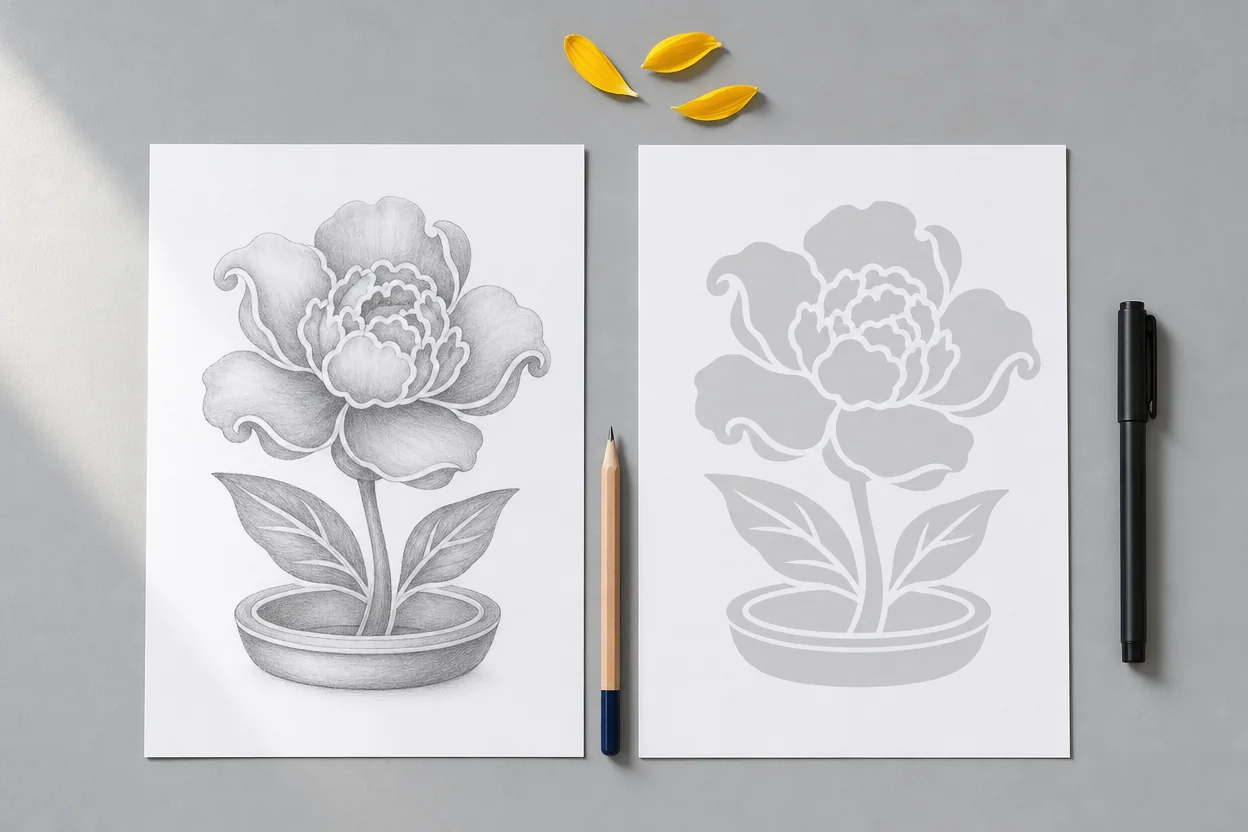
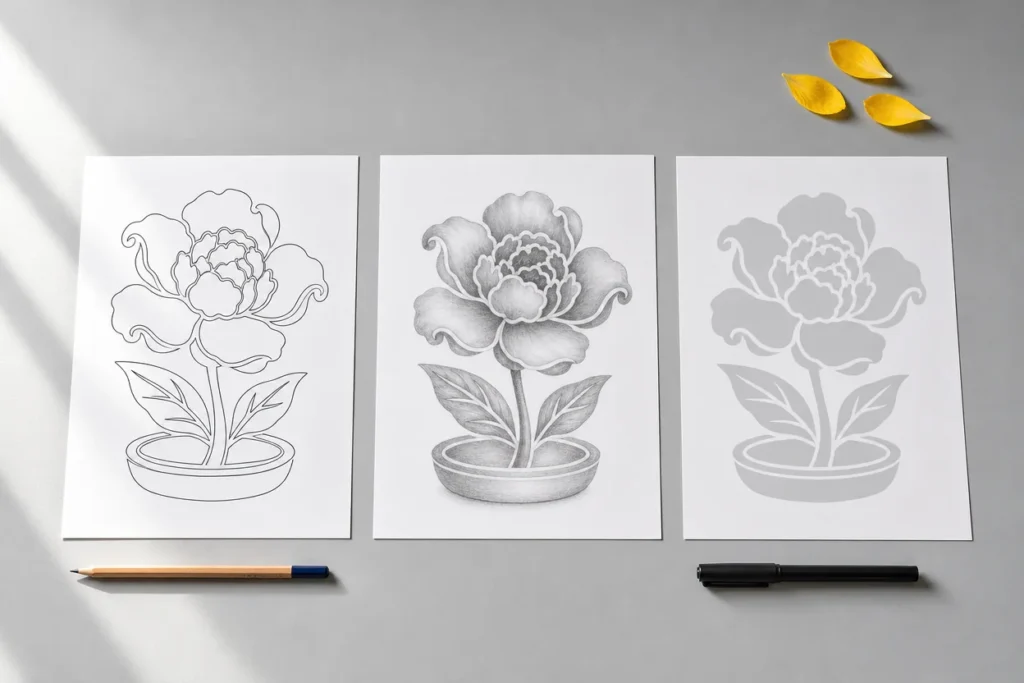
Grayscale coloring uses a shaded black-and-white image, often based on a photograph or a detailed painting. You color over it with many colors, using light glazes, and the printed gray tones show through as shadows and highlights. Monochrome coloring uses a design made to be finished in one single color. On gray-guide pages, the gray is a flat, pale placeholder that disappears under your pen, so the finished page has no gray left at all.
| Grayscale page | Monochrome (gray-guide) page | |
|---|---|---|
| What the gray is | Real shading: dozens of tones from light to dark | One flat, pale tone marking the shapes |
| Colors you use | Many, layered lightly | One, for the whole page |
| Typical tools | A set of colored pencils | One dark pen, marker or pencil |
| Does the gray show at the end? | Yes, it does the shading | No, it is covered completely |
| Skill and time | More technique, often several hours | No technique, 15 to 45 minutes |
| Finished look | Realistic, painterly | Crisp, graphic, like an ink print |
| Decisions while coloring | Many: which color, how heavy | Almost none |
What are grayscale coloring pages?
Grayscale pages are printed in shades of gray, much like a black-and-white photo. The darkest areas mark shadows and the lightest mark highlights. Because the shading is already there, a few light layers of color produce a surprisingly realistic result: faces, animals, landscapes and still lifes are popular subjects. They are loved by colorists who enjoy blending and want a painterly finish without drawing the shadows themselves.
What are monochrome coloring pages?
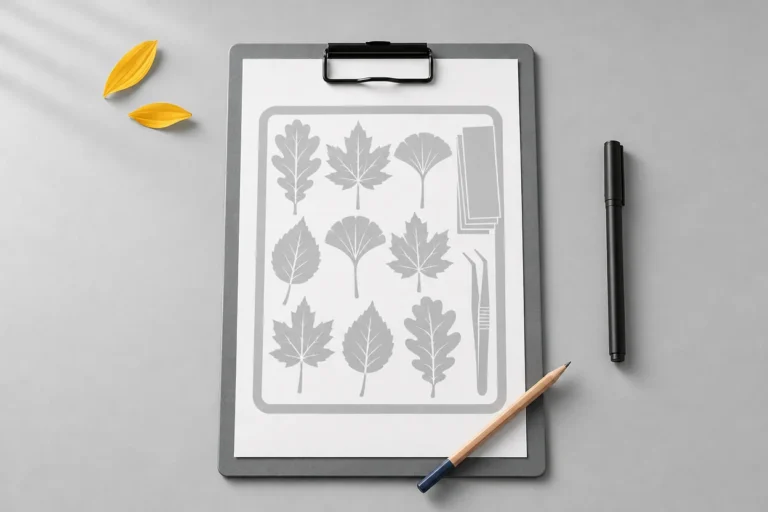
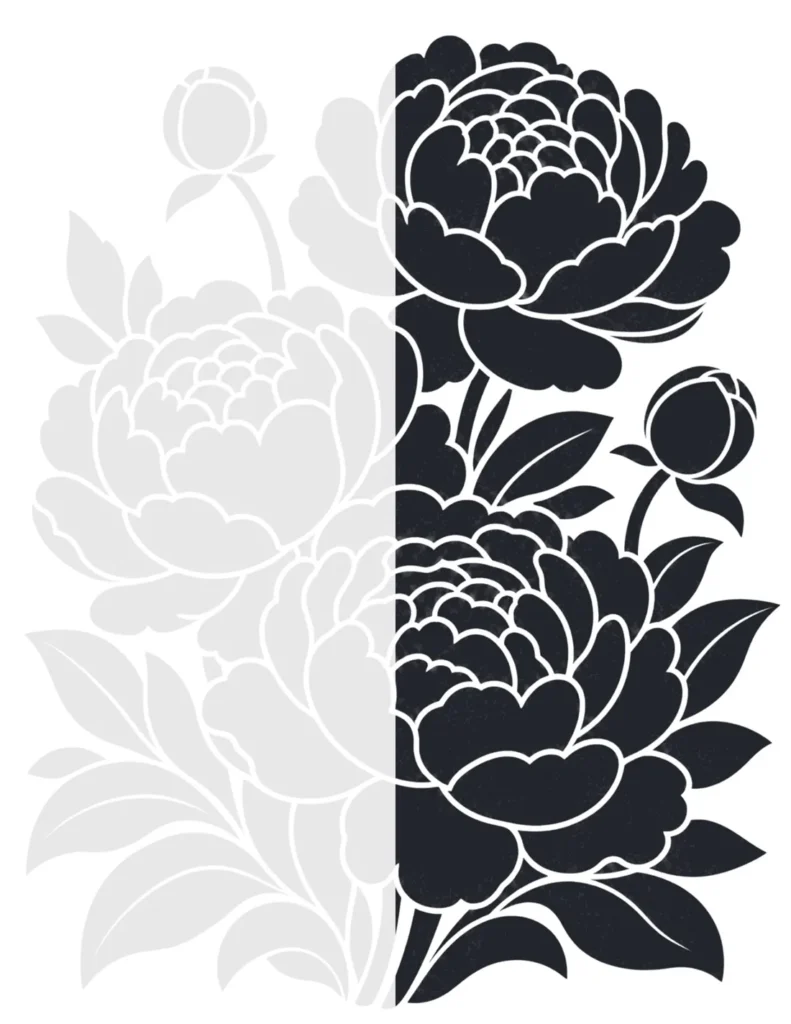
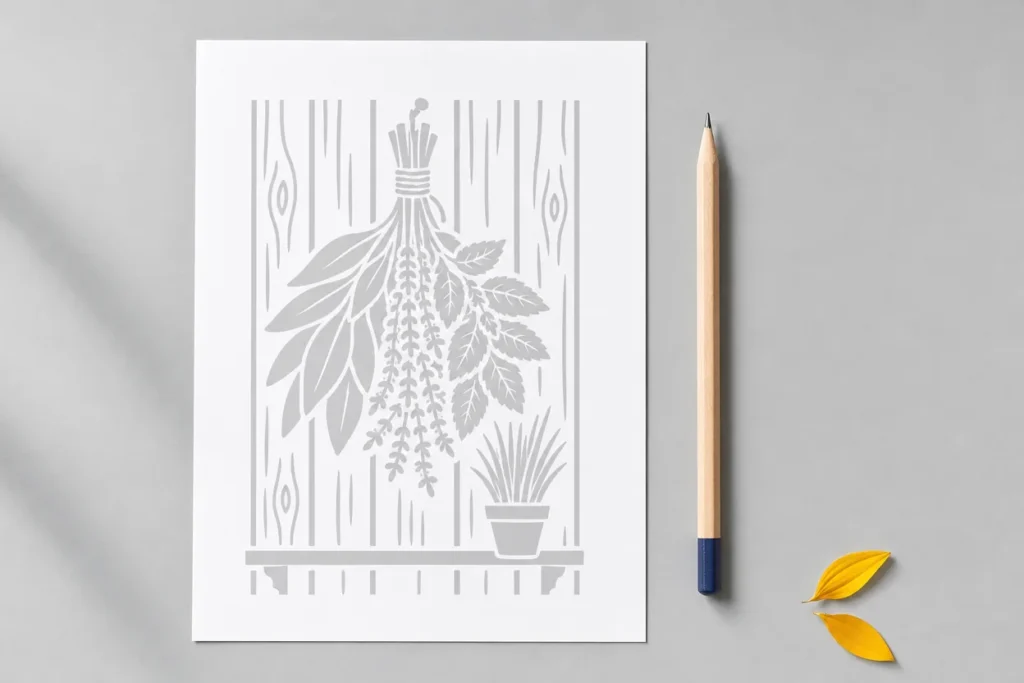
Monochrome pages are designed to be completed with one single color, usually one dark pen. There are a few styles: some use dots or small symbols in the areas to fill, some use thin outlines, and some, like ours at Soft Ink Press, print every shape as a flat pale gray with no outlines or marks at all. You color the gray, and the thin white gaps between shapes become the lines of the drawing. Read what is monochrome coloring? for the full explanation.
How to color grayscale pages
- Print on smooth, heavier paper so layers go on evenly.
- Use light, transparent layers. Colored pencils work best; press gently so the printed gray still shows through.
- Start with the mid-tones, then glaze darker colors into the shadow areas.
- Leave the lightest areas almost bare so they read as highlights.
- Blend with a colorless blender or a white pencil if you want a smoother finish.
How to color monochrome gray-guide pages
- Choose one pen or pencil. A water-based black brush pen gives the classic black-and-white print.
- Fill each gray shape completely, starting with the largest.
- Keep the white gaps clean. They are the drawing.
- Use a fine tip for small shapes and edges.
Our guide to pens for monochrome coloring lists tools that will not bleed through.
Which one should you choose?
- Choose grayscale if you enjoy blending, own a good pencil set, like realistic subjects and are happy to spend a few evenings on one page.
- Choose monochrome if you want a calm session with no color choices, have 15 to 30 minutes, are new to coloring or returning after a break, and like a graphic, frameable finish.
- Not sure? Monochrome is the gentler place to start. It costs one pen and shows you within ten minutes whether coloring relaxes you.
Are grayscale pages calmer because they are gray? Not really. The gray look is quiet, but grayscale coloring involves many decisions and some technique, which suits people who enjoy a challenge. If calm is the goal, the number of decisions matters more than the color of the page, which is why we compare monochrome and colorful coloring books for stress relief separately.
Try a monochrome page for free
Our free botanical pack has 10 gray-guide garden pages made for one dark pen, as an A4 PDF that also prints on US Letter. Print one and see how different it feels from a grayscale page.
Frequently asked questions
What is the difference between grayscale and monochrome coloring?
Grayscale pages are shaded images in many tones of gray that you color with many colors, letting the gray act as shadows. Monochrome pages are designed to be finished in one single color; on gray-guide pages the flat gray disappears completely under your pen.
How do you color grayscale coloring pages?
Use colored pencils in light, transparent layers so the printed shading shows through. Start with mid-tones, glaze darker colors into the shadows and leave the palest areas nearly bare for highlights. Smooth, heavier paper makes layering easier.
Are grayscale coloring pages good for beginners?
They can be, because the shading is done for you, but they reward technique and patience. Complete beginners often find one-color monochrome pages easier: there is nothing to blend and a page finishes in under an hour.
Can you color grayscale pages with one color?
Yes. A single color over grayscale gives a tinted, sepia-like photo effect. It looks different from a monochrome page, where the gray is fully covered, but it is a pleasant, low-decision way to use grayscale pages.
Is a gray coloring book the same as a grayscale coloring book?
Not always. “Gray coloring book” is used for both grayscale books and monochrome gray-guide books. Look at a sample page: many tones of gray with soft shading means grayscale; flat, even gray shapes separated by white gaps means monochrome.